
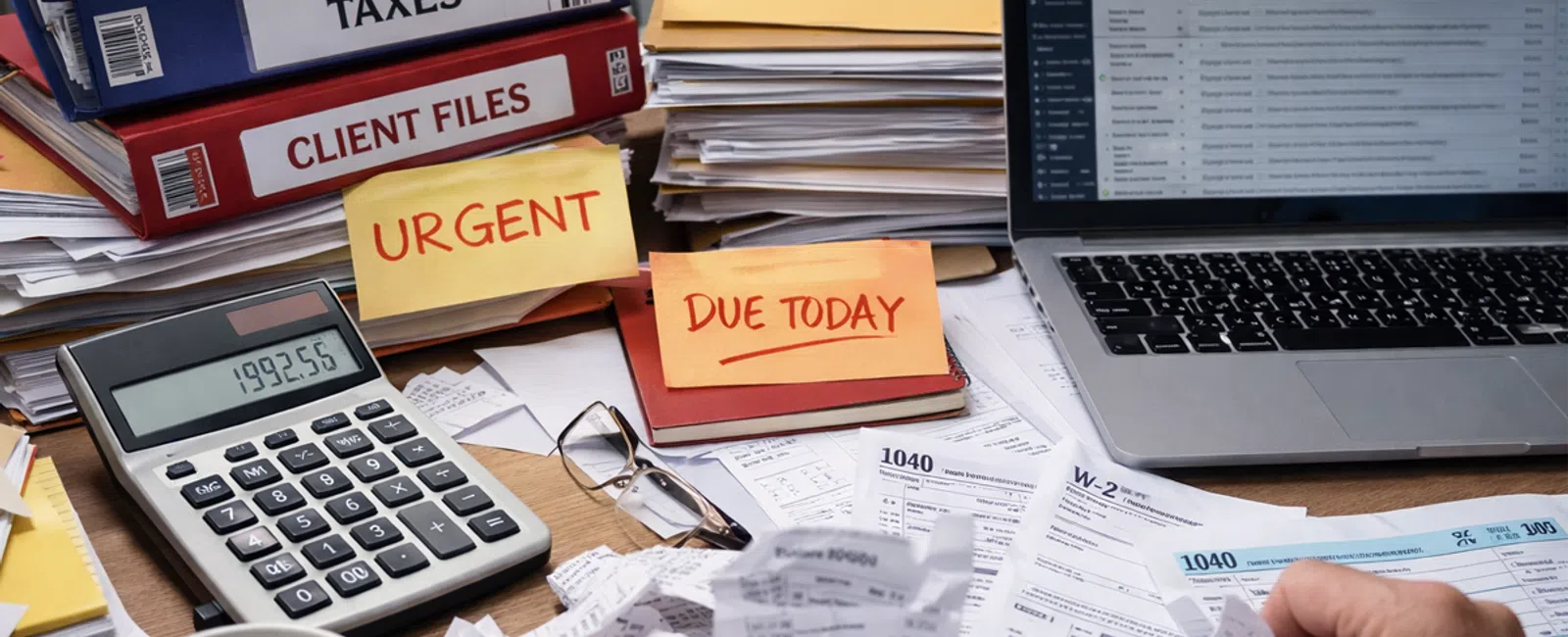
It's March.
Your accountant
is buried. Your bookkeeper is scrambling. Deadlines are looming. Emails are
flying faster than anyone can keep up.
Everyone's head
is down, just trying to get through the month.
This isn't news
to you.
But it isn't
news to hackers either.
Security
researchers consistently see a significant spike in phishing attempts during
tax season, with March bringing roughly a 28% increase in tax-themed
scam emails compared to quieter months. These messages aren't dramatic.
They're designed to blend in with everyday business requests, right when people
are busiest.
That's not
coincidence.
That's timing.
Here's what's coming and four simple ways to make sure your business isn't the
easy target.
The Stressed Supply Chain
Here's what
most people miss:
Hackers aren't
just targeting accounting firms.
They're
targeting the chaos around them.
When tax season
hits:
- Clients rush to send sensitive
documents
- Staff members shortcut normal
checks to keep up with volume
- "Just send me the file" replaces
usual caution
- Verification gets skipped because
everyone is slammed
The whole
ecosystem speeds up.
And speed is
where mistakes happen.
Hackers don't
go after calm, methodical businesses.
They go after busy ones.
March is busy.
What These Attacks Actually Look Like
This isn't a
movie plot.
It's an email
that looks exactly like the others in your inbox.
- A message from "your accountant"
asking you to resend W-2s because something didn't come through
- A note from a vendor saying their
bank information has changed and needs updating
- A DocuSign request for a tax
document that "needs your signature today"
- An urgent email from "your CEO"
who's traveling and needs help immediately
None of these
feel suspicious.
They feel like
normal business in March.
That's why they
work.
Why Busy People Get Caught
This isn't
about being careless.
It's about
being human.
When inboxes
are full and deadlines are tight, people don't read carefully. They scan. They
assume. They react.
Scammers know
this.
Their messages
are designed for people who are moving too fast to notice the one detail that's
off. They don't need you to be reckless. They just need you to be busy.
And in March,
almost everyone is.
Four Simple Ways to Not Be the Easy Target
The good news
is you don't need fancy tools or a security team to reduce your risk.
You just need a
few intentional habits during busy months.
1. Verify payment changes by phone
If an email
says a vendor's banking details have changed, don't reply to the message.
Call a number you already trust and confirm it verbally.
This single habit prevents some of the most expensive scams businesses face.
2. Slow down requests for sensitive information
Urgency should
be a signal to pause, not to rush.
If someone asks for W-2s, tax documents or financial files "right now," take a
moment to verify first.
The real sender won't mind a short delay. A scammer will.
3. Confirm "urgent" requests through a second channel
If an email
claims something is urgent, verify it another way.
A quick call, text or internal message can stop a bad decision before it
starts.
Real urgency can survive a two-minute check. Fake urgency can't.
4. Give your team a five-minute heads-up
This week,
remind your team that tax season is prime time for scams.
Tell them it's okay to slow down, double-check and ask questions when something
feels off.
That small permission shift can prevent a lot of unnecessary cleanup later.
The Takeaway
Tax season is
stressful enough without adding "fell for a scam" to the list.
The attacks
that show up this month aren't especially clever. They're just well-timed.
They rely on
people being rushed.
They rely on assumptions.
They rely on everyone trying to power through March.
You don't have
to overhaul your systems to avoid becoming the easy target.
You just have to slow down when it matters and verify when things feel urgent.
That's often
enough.
A Quick Busy-Season Sanity Check
Your business
may already have good habits in place, and if it does, that's great.
But if tax
season tends to push everyone into reactive mode, or you're not sure how your
team handles urgent requests under pressure, it may be worth a quick sanity
check with a free {{ call-time }}.
No scare tactics. No pressure. Just a clear look at whether small habits could
prevent big headaches this time of year.
If this doesn't
sound like your business, feel free to forward it to someone it does.
Click here or give us a call at 332-217-0601 to schedule your free {{ call-time }}.


