
Most businesses hope they never experience a serious disruption, but recovery depends on more than good intentions.
It depends on preparation.
An incident response plan gives your team a clear framework for what to do, who to notify and how to move forward when the unexpected occurs.
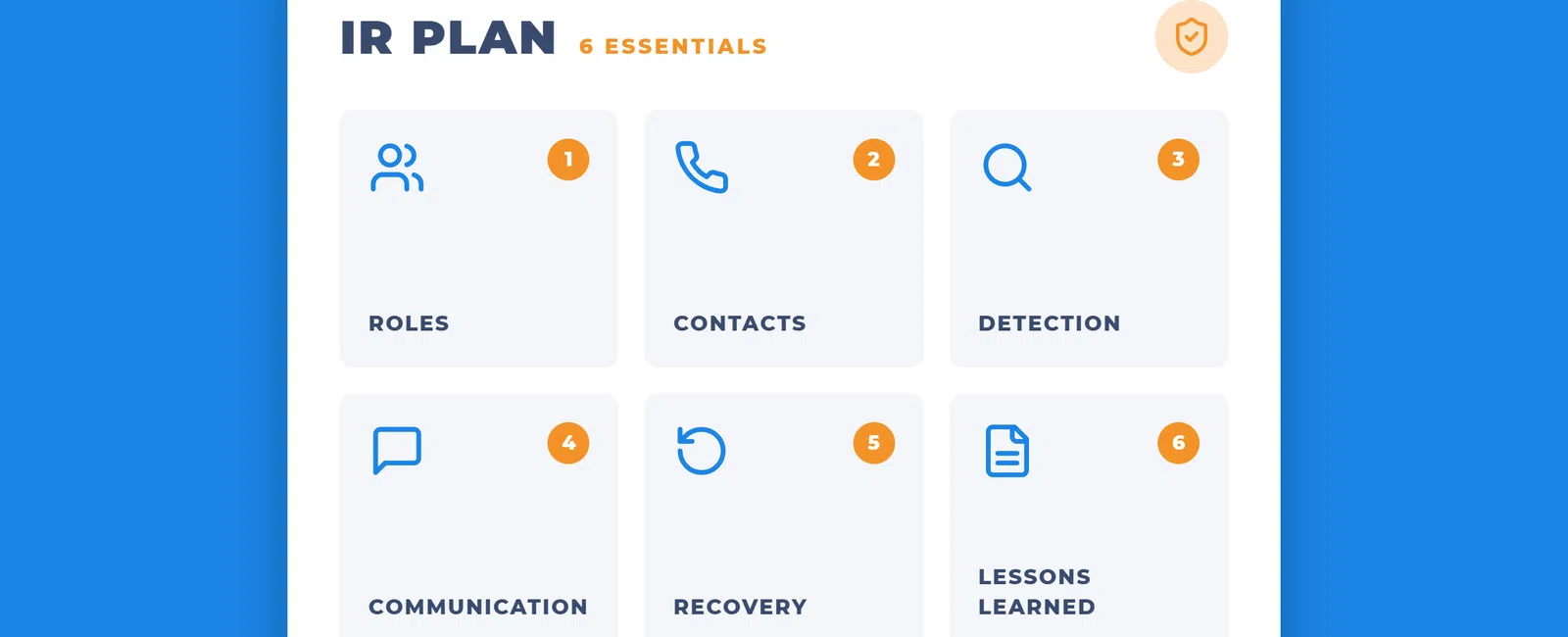
Below are the six essentials every incident response plan should contain:
1. Defined roles and responsibilities
When a disruption happens, uncertainty slows everything down. Even strong teams lose momentum when no one knows who owns which task.
Your incident response plan should spell out:
· Who makes decisions
· Who updates employees
· Who coordinates with IT providers
· Who speaks with customers and vendors
Without clear ownership, people can duplicate effort while important tasks get missed. That creates confusion, delays and avoidable gaps in the response.
When responsibilities are assigned in advance, action happens faster. Decisions move forward, communication stays aligned and every team member knows exactly where they fit.
2. Emergency contact details
During an incident, time matters. Searching for contact information or confirming the right person to call wastes valuable minutes.
Your plan should include current contacts for:
· Internal leadership
· IT service providers
· Software vendors
· Cyber insurance providers
· Legal counsel
· Important business partners
This information must be accurate, organized and easy to reach. A missing vendor contact or outdated phone number can create serious delays when every second counts.
Keeping contacts in one accessible place removes friction. Instead of scrambling to find the right person, your team can respond immediately.
3. Communication procedures
Communication often breaks down when systems fail. Email, chat tools and internal platforms may not be available when you need them most.
A strong plan should define:
· Internal communication methods
· Employee notification steps
· Customer communication expectations
· Vendor communication processes
This ensures updates keep moving even if primary tools go offline. Your team will know how to stay connected, and leadership can keep everyone informed without unnecessary delays.
It also creates consistency with outside stakeholders. Customers and partners receive timely, clear updates instead of confusion, silence or mixed messages.
4. Critical business systems and priorities
Not every system should be restored in the same order. Some applications directly affect revenue or customer service, while others support internal operations.
Your incident response plan should identify:
· Mission-critical applications
· Essential business processes
· Recovery priorities
· Acceptable downtime expectations
Without clear priorities, teams may try to restore everything at once. That spreads resources too thin and slows recovery across the board.
Defined priorities help your team focus on what keeps the business running. They also give leadership the insight needed to decide what can wait and what needs immediate attention.
5. Recovery procedures
When an incident occurs, your team needs steps they can act on right away. Vague direction leads to hesitation, mistakes and wasted effort.
Your plan should outline:
· Initial response actions
· Escalation procedures
· Recovery priorities
· Decision-making processes
These steps do not need to be overly technical, but they should be simple enough for anyone to follow without decoding complicated instructions.
A well-structured response lowers the risk of errors and keeps everyone working toward the same outcome. It also helps newer team members contribute confidently during high-pressure situations.
6. Testing and review schedule
An incident response plan is only effective when it matches your business as it operates today. Changes in systems, vendors or staffing can quickly make parts of the plan outdated.
Make time to regularly:
· Review procedures
· Update contact information
· Test recovery processes
· Document lessons learned
Testing reveals how the plan performs in a real-world scenario. It exposes gaps that may not be obvious on paper and gives your team a chance to practice their roles before a real emergency.
Routine reviews keep the plan relevant and reliable. Without them, even a strong plan can lose effectiveness over time.
Be ready before a disruption hits
The best incident response plans are not created during a crisis. They are built in advance and updated as the business changes.
When an unexpected event happens, preparation removes uncertainty. Your team already knows what to do, so there is no wasted time figuring it out under pressure.
Not sure whether your incident response plan includes everything it should?
Let's review your current setup, identify the gaps and strengthen your response before an issue forces you to make a quick decision. Click here or give us a call at 332-217-0601 to Book Your CyberSCORE.


