
Business disruptions rarely announce themselves in advance.
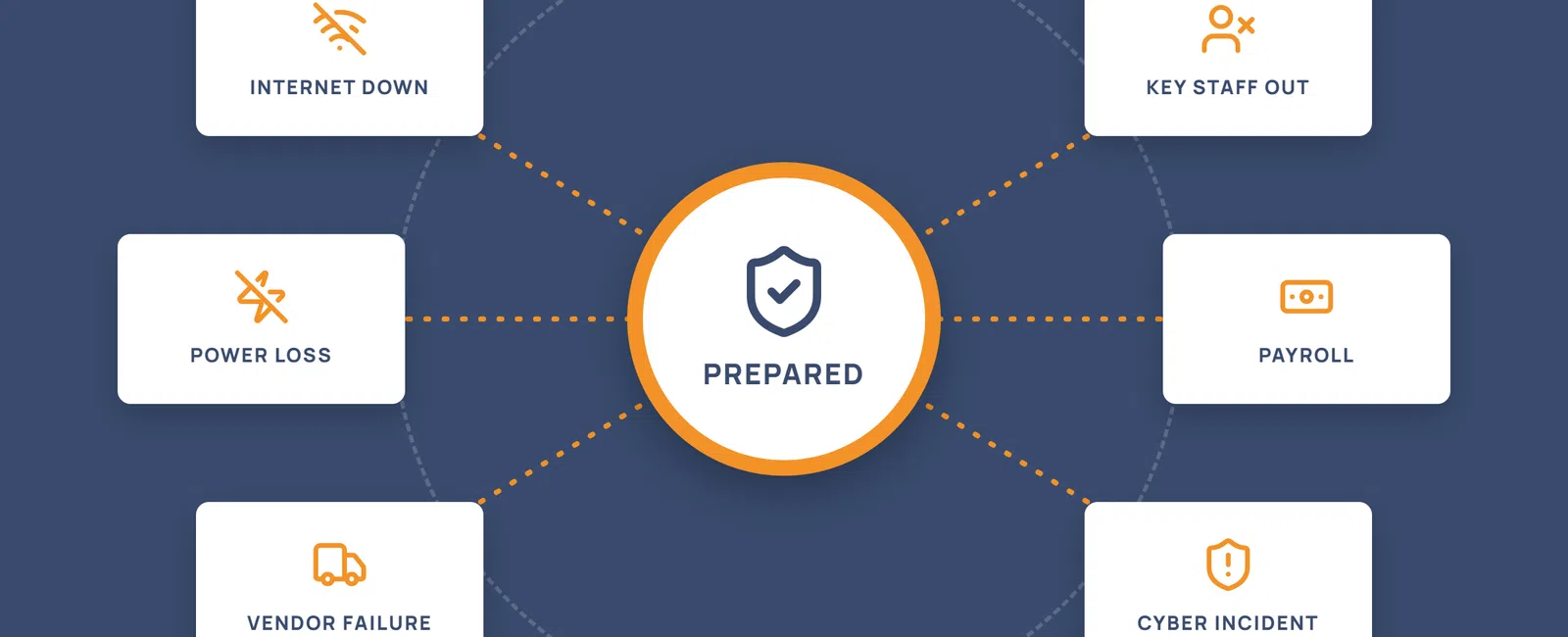
One morning the internet may be down, leaving your team unable to reach customer records. A critical employee could be out unexpectedly, and payroll grinds to a halt because no one else knows the process. Or a file gets deleted, and the backup everyone assumed was safe has never been tested.
These issues may not seem like major crises at first, but they can stop operations, slow customer service and create stress across your entire team.
Below are some of the most common disruptions businesses face, along with the steps that help you stay ready before they happen:
1. Cyberattacks and ransomware
A cyberattack can lock your team out of the systems and data they rely on every day, making it harder to keep work moving and customers supported.
How to prepare:
· Build an incident response plan: Define who to notify, who makes decisions and which systems should be addressed first.
· Verify your backups: Backups only matter if they can be restored quickly and dependably when you need them.
· Train employees on security essentials: Cybercriminals often target people with fake links, unsafe attachments or stolen credentials. Employees should know what suspicious activity looks like and how to report it right away.
2. Hardware and software failures
Devices, applications and systems can fail without warning. When they do, your team may be forced to wait until the problem is resolved.
How to prepare:
· Back up on a schedule: Make sure important data can be recovered if equipment or software fails.
· Write down recovery steps: Your team should know the first actions to take and the right person to contact.
· Test restoration regularly: Confirm your backups and systems can actually be restored before an outage puts them to the test.
3. Human error
Even careful employees make mistakes. A deleted file, an email sent to the wrong person or an accidental settings change can interrupt operations if there is no clear recovery process.
How to prepare:
· Restrict access: Give employees access only to the files and systems they truly need.
· Set recovery procedures: Make sure your team knows who to alert and how to restore the affected file, setting or system.
· Provide ongoing training: Help employees understand how to handle important data, when to slow down and when to ask for help.
4. Internet or cloud service outages
When the internet or a cloud platform goes offline, your team can suddenly lose access to the tools they depend on. Customer records, communication platforms and other business systems may all become unavailable at once.
How to prepare:
· Keep a backup connection: A second internet line or mobile hotspot can help critical work continue during an outage.
· Plan for offline operations: Know which tasks can still be completed without internet access, and make sure your team understands the process.
· Define a communication plan: Decide how your team will stay connected, who must be notified and when customers should receive updates.
5. Severe weather and natural disasters
Storms, floods and other disasters can close offices, interrupt power and keep employees from getting to work. Recovery may take hours or even days, especially if backup systems were not already in place.
How to prepare:
· Support remote work: Make sure employees have the tools, access and procedures they need to work from another location.
· Protect your data: Keep backups offsite or in the cloud so physical damage does not lead to permanent data loss.
· Create a business continuity plan: Document how your company will keep operating during and after a disruption, and make sure the plan is easy for your team to find.
6. Key employee unavailability
This issue catches many businesses by surprise. If only one person knows how to run payroll, manage a vendor account or handle a critical process, operations can stall even when everything else is working.
How to prepare:
· Document essential processes: If a task depends on one person's knowledge, put it in writing so someone else can take over.
· Cross-train your staff: Make sure more than one employee knows how to handle key responsibilities.
· Store credentials securely: Keep access details in a protected, approved system instead of relying on one person's memory or device.
Build your plan before you need it
You cannot predict every outage, mistake or system failure, but you can control how prepared your business is to respond.
Preparation is not about removing every risk. It is about replacing uncertainty with a plan you can rely on. With documented procedures, clear responsibilities and tested recovery steps, your team can respond quickly instead of scrambling.
Click here or give us a call at 332-217-0601 to Book Your CyberSCORE. We'll help identify gaps and strengthen your recovery strategy before something puts it to the test.


